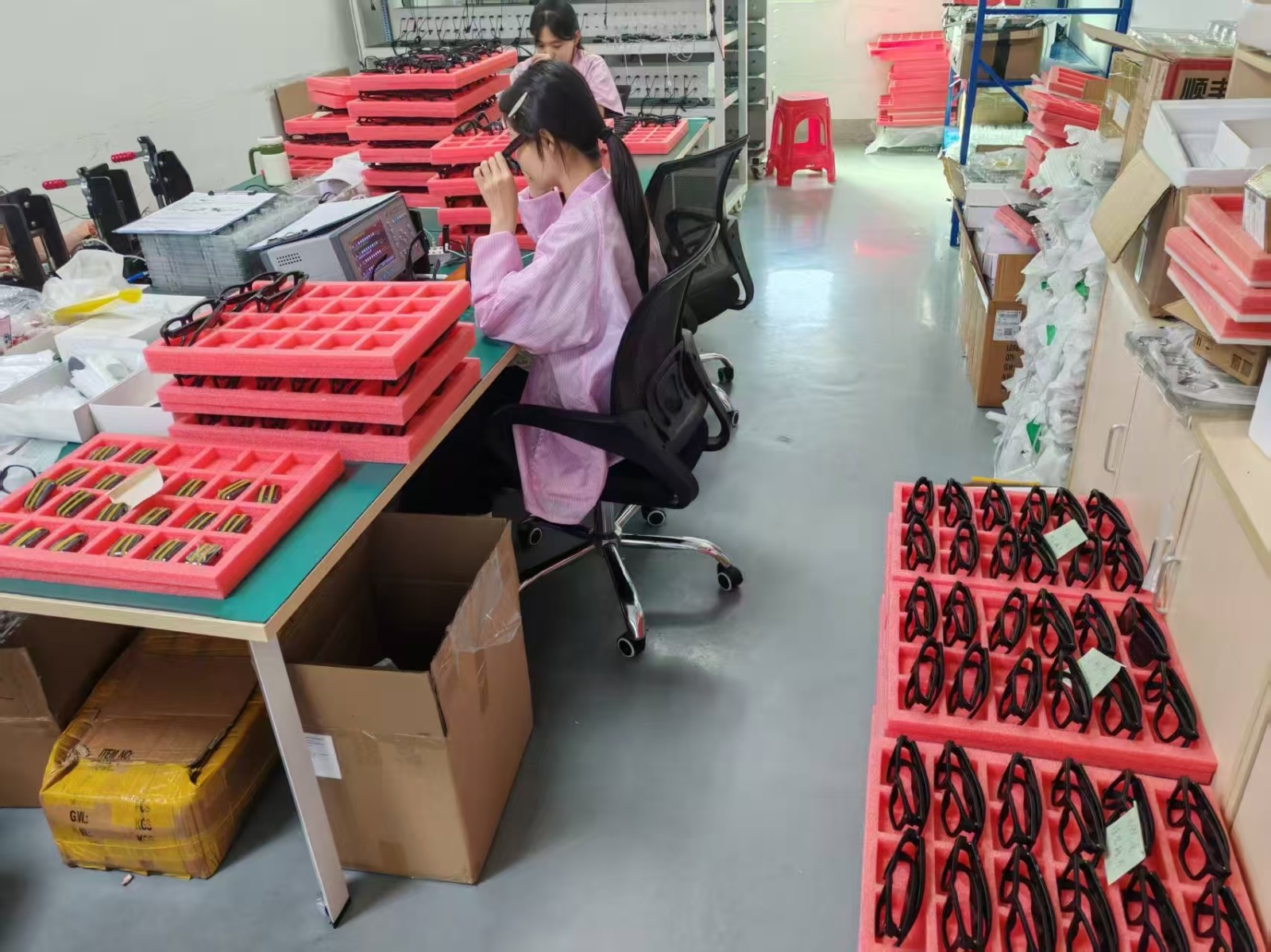
AI Glasses: Data-Driven Productivity Gains and ROI
Early pilots and enterprise trials using AI glasses report measurable uplifts: faster task completion, lower error rates, and reduced downtime when devices deliver context-aware guidance. Decision-makers in US firms increasingly treat these wearables as productivity tools because pilots yield quantifiable KPIs rather than anecdotal benefits.
This article promises a clear, data-driven path: review the evidence, lay out ROI models, and supply an actionable deployment roadmap for operational leaders. Readers will find concrete metrics to track, reproducible ROI scenarios, and a practical implementation playbook sized for single-site pilots through enterprise rollouts.
What are AI Glasses and Why They Matter for US Workplaces
How AI Glasses Work
AI glasses combine camera and sensor arrays, microprocessors for edge AI, optional displays or audio overlays, and voice/gesture input to deliver hands-free assistance. On-device processing minimizes latency for step-by-step guidance, while cloud services enable heavy analytics and model updates.
Primary Use Cases
High-impact use cases include remote assistance for field engineers, guided assembly in manufacturing, point-of-care support for clinicians, and inventory picking in warehouses. The strongest ROI appears where tasks are sequential or error-prone.
Measured Productivity Gains: Data-Driven Evidence
10–30%
Reduction in Task Time
20–50%
Reduction in Errors
Metrics to Track
- Task Time: Total duration from initiation to completion.
- Error Rate: Frequency of mistakes during guided procedures.
- Rework: Incidence of repeating tasks due to quality failures.
- Cognitive Load: Measured via task-switching frequency.
Pilot Synthesis
Aggregated pilots show variance depends on task complexity. Aim for a pilot with a minimum of 30–50 users or repeated trials across 100+ tasks to reach actionable confidence for operational decisions.
ROI Modeling: Costs, Benefits, and Payback
| Scenario |
Productivity Lift |
Est. Annual Benefit (100 Users) |
| Conservative |
5% |
$360,000 |
| Baseline |
15% |
$1,080,000 |
| Optimistic |
30% |
$2,160,000 |
Note: Calculation based on $40/hr fully loaded rate and 100 users averaging 1,800 hrs/yr.
Integration Checklist
-
✓ Device Hardware (Battery, Camera, Edge Compute)
-
✓ ERP/CMMS/EMR API Integration
-
✓ Secure Middleware & Data Flows
-
✓ Offline Mode & Sync Protocols
Security & Compliance
Establish data governance for video and audio capture. For healthcare, ensure PHI protections. Provide a concise legal/IT sign-off template covering:
Encryption
RBAC Access
Retention Policy
Case Studies & Executive Checklist
Manufacturing
Guided AR checks cut assembly time by 18% with a payback under 9 months.
Field Service
Remote assistance reduced truck rolls and lowered repair time by 22%.
Healthcare
Improved documentation accuracy and reduced chart rework by 25%.
Pilot-to-Scale Playbook
WEEK
Define KPIs and select the primary pilot site.
QUARTER
Run an 8–12 week pilot, iterate workflows, and secure budget.
YEAR
Stage rollouts and bake AI workflows into standard operating procedures.
Summary
- Adopt a data-driven evaluation: Quantify task time, error rates, and rework to determine impact before scaling.
- Run a disciplined pilot: 8–12 weeks with 30–50 users gives actionable confidence for ROI modeling.
- Use a three-scenario ROI model: Validate time-savings and present sensitivity analysis to finance stakeholders.
Frequently Asked Questions
How quickly do AI glasses deliver measurable productivity improvements?
+
Measurable improvements often appear within the first 4–12 weeks of a focused pilot, depending on task frequency and training quality. Early gains come from eliminating lookup time and reducing errors.
What productivity metrics should organizations track when deploying AI glasses?
+
Track task completion time, first-pass yield or error rate, rework incidents, and adoption metrics such as daily active users and time-on-device.
What is the minimum pilot size to justify scaling AI glasses across a site?
+
A statistically useful pilot often includes at least 30–50 distinct users or repeated trials covering 100+ task events to capture normal operational variability.