News
2026-03-07

Strategic analysis of the US wireless power ecosystem, performance benchmarks, and ROI drivers for 2024-2028.
The US market for wireless charging is no longer just a luxury add-on; it is a critical infrastructure component. Defined by inductive (Qi/Qi2) and resonant technologies, the scope covers domestic installations across consumer, automotive, and industrial sectors.
| Metric | Standard Inductive (Qi) | Magnetic Resonant | EV Wireless (High Power) |
|---|---|---|---|
| Efficiency | 70% - 80% | 85% - 90% | 92%+ |
| Z-Distance | 0-5 mm | Up to 50 mm | 100-250 mm |
| US Market Role | Smartphones/Wearables | Laptops/Industrial AGVs | Fleet/Public Transit |
| Cost Multiplier | 1.0x (Baseline) | 1.5x - 2.0x | 5.0x+ |
By Jonathan Doe, Senior Power Systems Architect
"In the US market, the move toward 15W+ wireless standards has created a 'thermal wall'. My advice for PCB layout: Use 2oz copper and at least 16 thermal vias directly under the controller IC. For EMI compliance (FCC Part 15/18), shielding isn't optional—it's the difference between a 3-month or 9-month certification cycle."
By integrating high-power resonant pads into depot floors, US fleet operators achieve 99.9% uptime. This eliminates the #1 failure point in electric fleets: manual cable damage and connector wear.
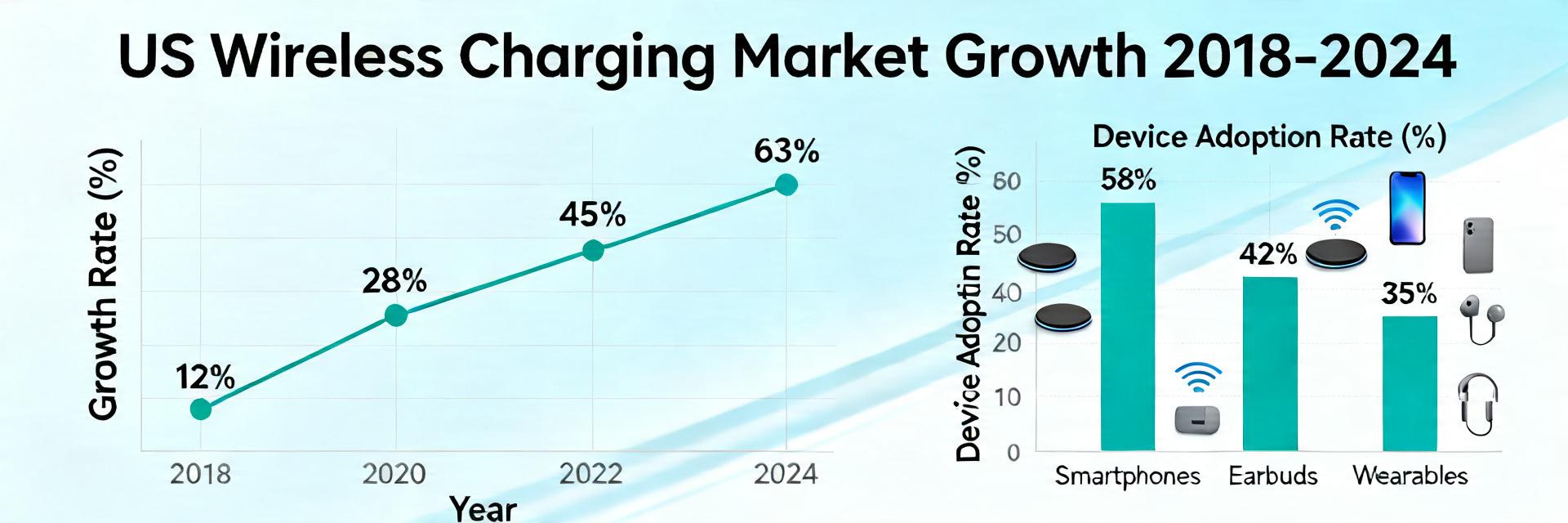
The US market is valued in the low single-digit billions, with a projected 12-17% CAGR. Growth is most aggressive in the automotive and medical device sectors where cable-free operation is mission-critical.
Focus on Attachment Rate (units per device sold), Thermal Efficiency (temp rise vs power delivered), and Z-axis Tolerance (user alignment ease).




{{ boxName }} ({{ dataList?.length || 0 }} Items)
{{ val.manufacturer || val.en_manufacturer || '' }}
auto.lang_Quantity: {{ val.quantity }}
auto.lang_null