News
2026-03-07

Recent market signals show accelerated adoption of contactless interfaces across retail, transit, and healthcare in the United States, driven by rising smartphone compatibility and expanded merchant acceptance. This article focuses on NFC functionality as a core enabling layer, sizing and segmenting the opportunity, mapping consumer and enterprise adoption trends, and offering an actionable playbook for US product and strategy teams.
Ensures 100% interoperability with global payment networks, allowing users to travel and pay internationally without friction.
Zero-power battery life for tags, enabling "instant-on" smart packaging and maintenance-free asset tracking.
Reduces hardware dependency, allowing software-based wallet updates that keep security protocols current in real-time.
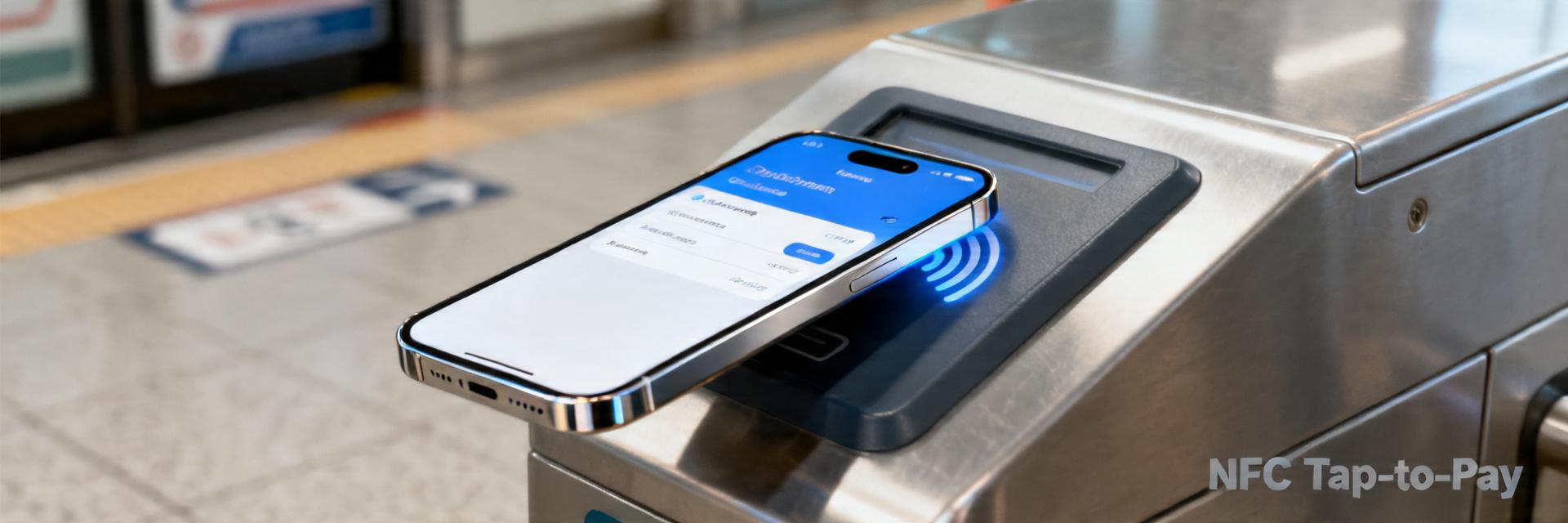
NFC deployment in modern urban retail environments.
| Metric | NFC (Proximity) | QR Codes | Bluetooth (BLE) |
|---|---|---|---|
| Connection Speed | < 0.1 Seconds | 2-5 Seconds (Camera) | 1-3 Seconds |
| Security Level | High (Hardware-backed) | Low (Visual spoofing) | Medium (Signal sniffing) |
| User Friction | Minimal (Tap only) | High (App + Camera) | Medium (Pairing/Range) |
| US Merchant Readiness | 90%+ | ~40% | < 20% (for payments) |
"The biggest failure point in US NFC rollouts isn't the protocol—it's the antenna placement. In mobile integration, a 5mm shift in the PCB layout or the choice of a metallic casing can drop the read range from 4cm to 1cm, leading to 'tap fatigue' and user abandonment."
Hand-drawn schematic, not a precise circuit diagram.
The "Express Transit" Workflow:
By leveraging Apple Pay Express Transit or Google Wallet, users bypass biometric authentication (FaceID/Fingerprint). This reduces "dwell time" at turnstiles by an average of 1.2 seconds per passenger, critical for high-density US metros like NYC and Chicago.
The US NFC market is no longer in its infancy. Analysts report steady double-digit growth driven by the "contactless mandate" post-2020. Vertical growth is segmented as follows:
While adoption is high, friction remains in commercial inhibitors and security perception. To mitigate these, businesses should:
Prototype-to-pilot usually takes 4-8 weeks. Full integration with payment processors (PCI compliance) can take 4-6 months.
Use hardware Secure Elements (SE) or certified HCE. Implement dynamic CVV and rotating session keys to prevent replay attacks.
Track Tap Success Rate (1st attempt), Transaction Latency, and Merchant Uptime.
Summary: NFC is the bridge between digital convenience and physical presence. For US businesses, success depends on moving past technical implementation to focus on seamless UX and robust security architectures that build consumer trust.




{{ boxName }} ({{ dataList?.length || 0 }} Items)
{{ val.manufacturer || val.en_manufacturer || '' }}
auto.lang_Quantity: {{ val.quantity }}
auto.lang_null